
Hidden Maintenance Costs That Catch New Jet Owners Off Guard
Buying a private jet is the ultimate realization of freedom. It promises the ability to go anywhere, anytime, bypassing the friction of commercial travel. However, for many first-time owners, the dream of flight often collides with the hard reality of the balance sheet during the first major maintenance event.
The sticker price of the aircraft is merely the entry fee; the true cost of ownership lies in the recurring, and often unpredictable, maintenance required to keep the machine airworthy. While fuel and hangar fees are obvious line items, the most significant financial shocks often come from below the surface—hidden mechanical and regulatory issues that can ground an aircraft and inflate budgets instantly.
Here is a look at the hidden costs that catch new owners off guard, how to mitigate them through strategic scheduling, and what to look for in a maintenance partner.
📉 The “Iceberg” Expenses: What You Don’t See
New owners often budget for the predictable: engine programs, insurance, and routine hourly inspections. However, aviation maintenance is rarely linear. The most expensive surprises usually stem from age, environment, and regulatory changes that aren’t immediately visible during a walk-around.
-
Corrosion: The Silent Budget Killer
Corrosion is the single most common cause of “sticker shock” during heavy maintenance checks. It hides in the most inaccessible areas of the airframe—beneath lavatories, under galleys, and inside wing tanks.
“New owners often assume that if the paint looks good, the metal underneath is fine,” says Rick Smith, Chief Inspector at Global MX. “But corrosion is insidious. It starts at a microscopic level in lap joints or around fasteners. By the time you see bubbling paint, you aren’t looking at a cleaning job; you’re looking at structural repairs and sheet metal work that can take weeks.”
-
Obsolescence and Avionics
In the world of consumer electronics, an old iPad is just slow. In aviation, an old flight management system (FMS) or cathode-ray tube display can become a grounding item if it fails and parts are no longer manufactured.
Owners may face a situation where a $5,000 component fails, but because it is “Beyond Economic Repair” and no replacement exists, they are forced into a $100,000 avionics retrofit.
-
Service Bulletins vs. Airworthiness Directives
 While Airworthiness Directives (ADs) are mandatory federal requirements, Service Bulletins (SBs) are issued by manufacturers to improve the product. Many owners treat SBs as optional to save money.
“Skipping recommended Service Bulletins is a false economy,” Smith notes. “We often see aircraft come in for a pre-buy inspection where the seller skipped years of SBs. The buyer’s broker spots this immediately, and suddenly the value of the aircraft drops significantly. You pay for it eventually—either in maintenance or in lost resale value.”
🗓️ The Strategy of Scheduling: Why “Drop-Ins” Don’t Work
One of the biggest misconceptions new owners harbor is that an aircraft maintenance facility operates like a quick-lube automotive shop. The reality is that Part 145 repair stations are complex logistical hubs.
Attempting to schedule maintenance only when something breaks leads to extended downtime and higher costs. This is primarily due to supply chain constraints and labor availability.
The Cost of AOG (Aircraft on Ground)
When an aircraft breaks unexpectedly, it enters AOG status. Shipping parts overnight, paying overtime labor rates, and scrambling for hangar space commands a premium.
“We try to teach our clients that the calendar is their most valuable maintenance tool,” explains Nicole Jeffords, VP MX at Global MX. “An unscheduled event is an emergency; a scheduled event is a strategy. If you book your slot six months out, we can pre-order parts, allocate our best specialists to your airframe, and turn the jet around significantly faster.”
Bundling Services
Smart scheduling allows owners to bundle tasks. If the aircraft is down for a required 96-month inspection, that is the ideal time to upgrade the Wi-Fi or refurbish the interior. Doing these separately doubles the downtime; doing them together maximizes the asset’s availability.
For more on optimizing your maintenance schedule, visit Global MX.
🛠️ Choosing a Part 145 Repair Station
Not all maintenance providers are created equal. When an owner entrusts a multi-million dollar asset to a shop, they are buying more than just wrench-turning; they are buying regulatory compliance and safety.
Here are the key considerations when selecting a repair station.
-
Capabilities and Training

Does the shop have specific experience with your make and model? A shop that specializes in Gulfstreams may not be the best fit for a Citation or a Learjet.
“You want a team that knows the personality of your specific airframe,” Jeffords says. “Factory training is non-negotiable. You want technicians who have been to school on your aircraft, not someone learning on the fly while billing you by the hour.”
-
Transparency in Billing
Hidden costs often arise from vague billing practices. A quality shop provides detailed estimates that break down flat-rate labor versus “discrepancy” labor (fixing things found during the inspection).
-
Regulatory Standing
A Part 145 certification means the station is approved by the FAA to perform specific maintenance functions. Owners should verify the station’s ratings and ensure they align with the work required.
✨ Hallmarks of a Quality Maintenance Team
How can an owner tell if a shop is up to par before the work begins? The clues are often in the culture and the environment.
The “Clean Hangar” Standard
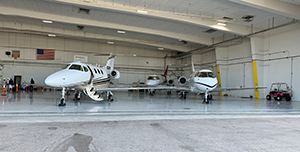
There is a direct correlation between a clean hangar and safe maintenance. If a shop floor is cluttered with debris, oil spills, or disorganized tools, it reflects a lack of discipline that likely extends to the documentation and the work itself.
Proactive Communication
The best maintenance teams act as partners, not just vendors. They should provide daily or weekly status reports, including photos of any discrepancies found.
“We believe in ‘no surprises’ invoicing. If we open a panel and find corrosion, the owner gets a photo and a phone call immediately, not a surprise bill three weeks later. Trust is the currency of this industry.”
-Nicole Jeffords, VP of Maintenance
The “Global MX” Approach
At Global MX, the focus is on merging technical precision with owner advocacy. By anticipating supply chain issues and maintaining rigorous standards for documentation, the team ensures that the aircraft retains its value and, most importantly, its safety.
“Our job isn’t just to fix the plane,” Smith concludes. “It’s to give the owner the confidence that when they climb to 45,000 feet, every bolt, wire, and seal is exactly where it needs to be.”
💡 Summary & Key Takeaways
Owning a jet is a complex financial and operational undertaking. The difference between a nightmare ownership experience and a seamless one often comes down to the quality of the maintenance strategy.
By understanding the hidden costs of corrosion and obsolescence, scheduling maintenance proactively, and partnering with a transparent, high-quality Part 145 station like Global MX, owners can protect their investment and enjoy the skies with peace of mind.
| Maintenance Consideration | The “New Owner” Trap | The Pro Strategy |
| Scheduling | Waiting for a failure to book a slot. | Booking annuals 6–12 months in advance. |
| Service Bulletins | Ignoring them to save money. | Implementing them to boost resale value. |
| Shop Selection | Choosing the lowest hourly rate. | Choosing based on model-specific expertise. |
| Budgeting | Budgeting only for the quote. | setting aside a 15–20% contingency fund. |